ShenZhen Toupwell Technology Co.,Ltd


 | LisaKong |
 | 18925229935 |
 | 0086-755-85218623 |
 | sales@toupwell.com |
 | 2/F.Building A.No.78 of AnLiang Road.YuanShan Street.LongGang District.ShenZhen.GuangDong.China |
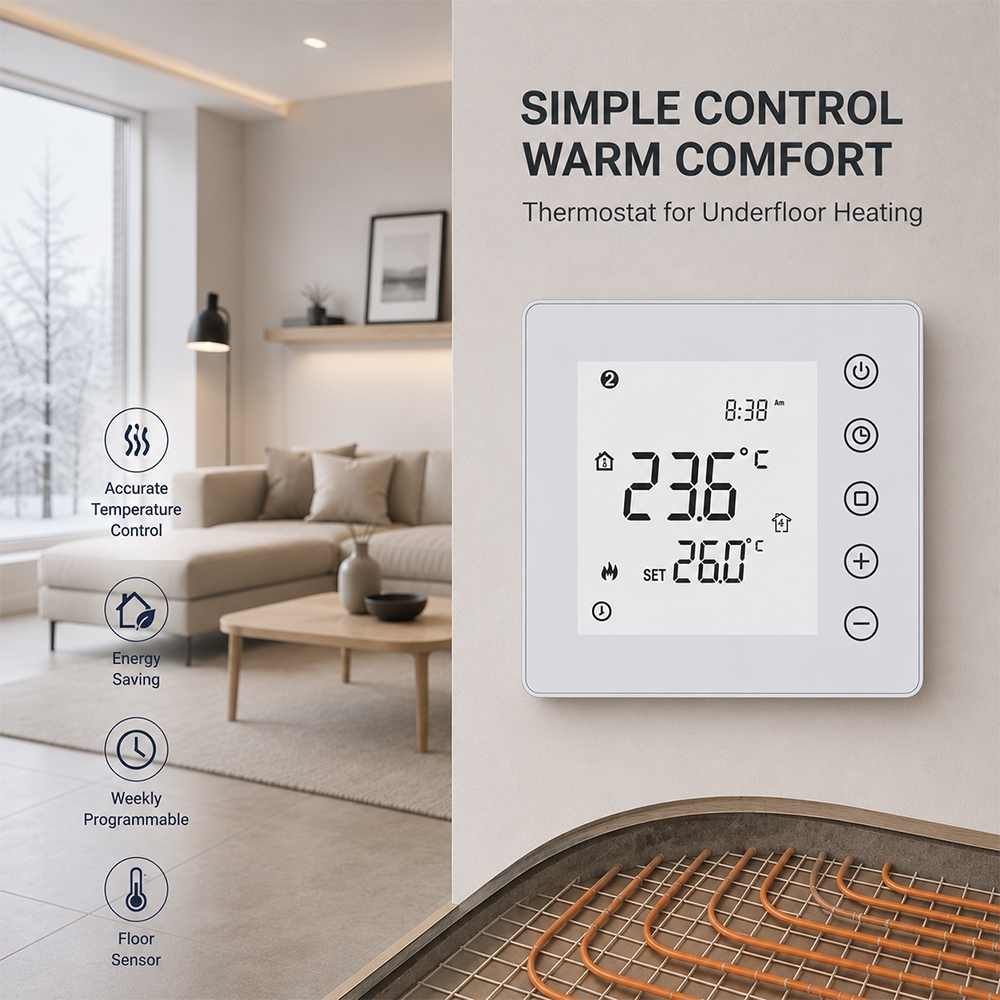
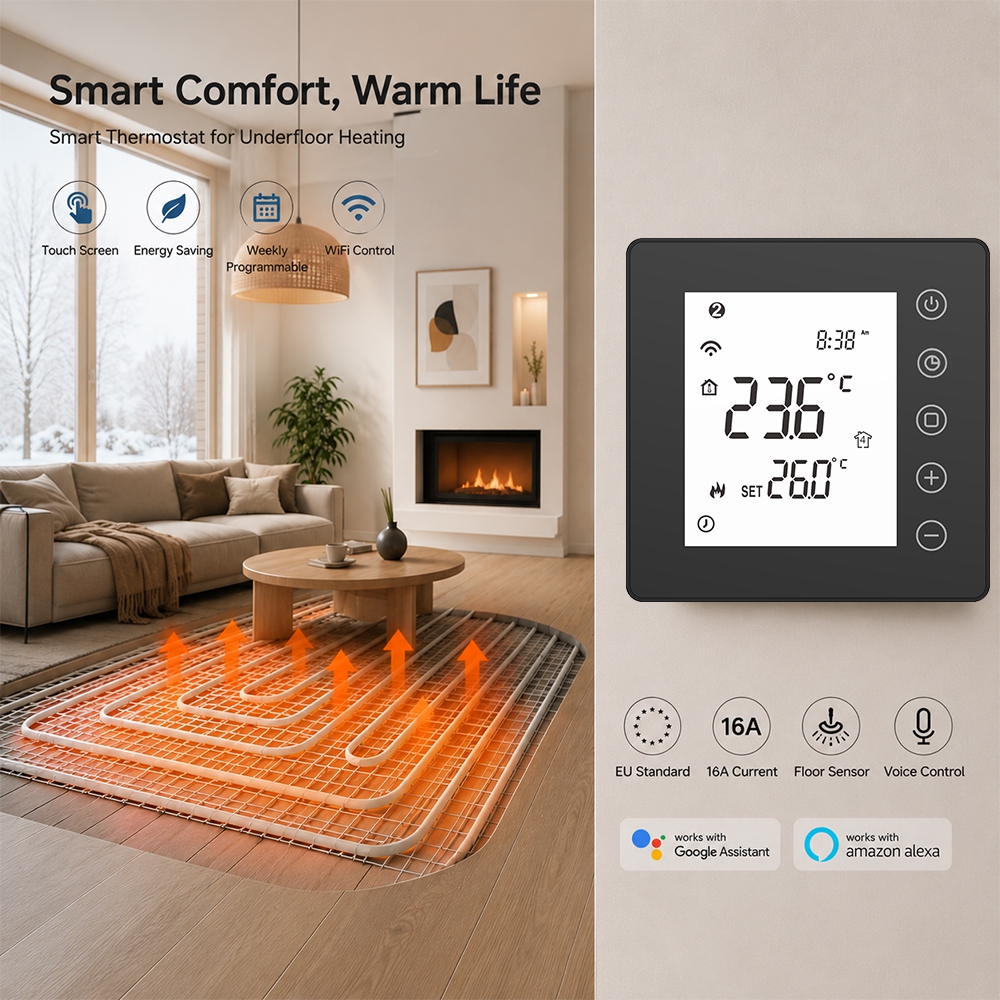
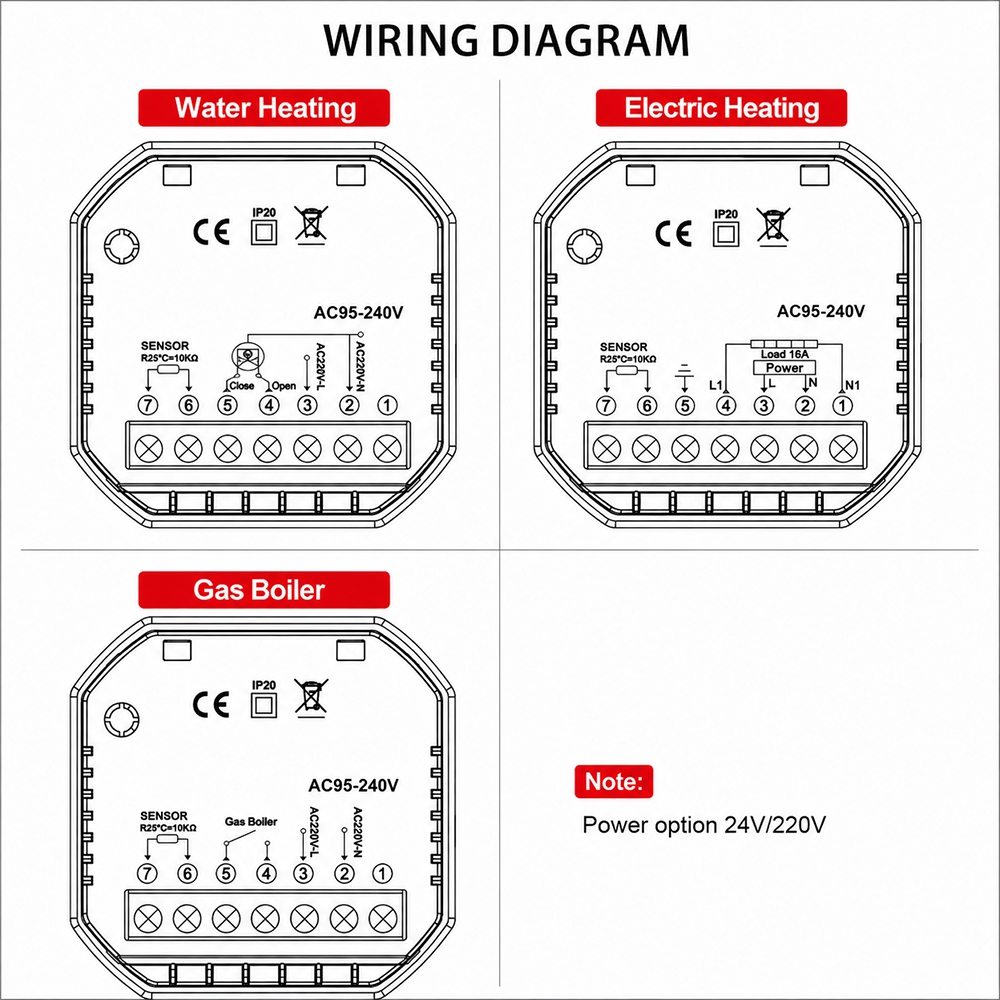
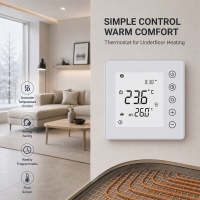
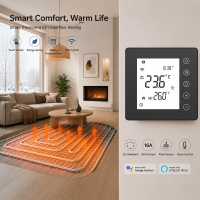
Application: Water Underfloor Heating System/Hydronic Underfloor Heating System
Model: WIFI version model
TP201WHPW-B(Black) / TP201WHPW-W(White)
TP201WHPW-B-24V(Black)/ TP201WHPW-W-24V(White)
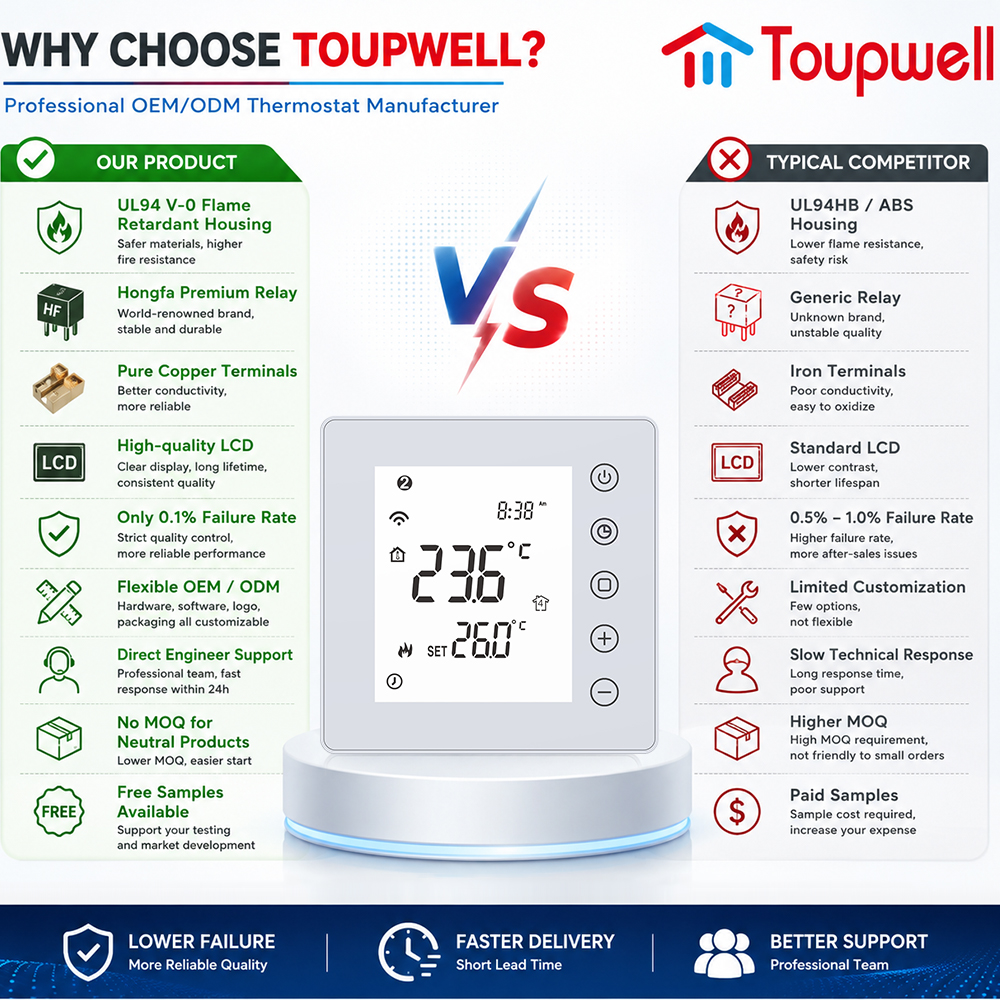
*UL 94V0 PC anti fire housing to make sure saftely
*TN LCD with backlight.Easily to see
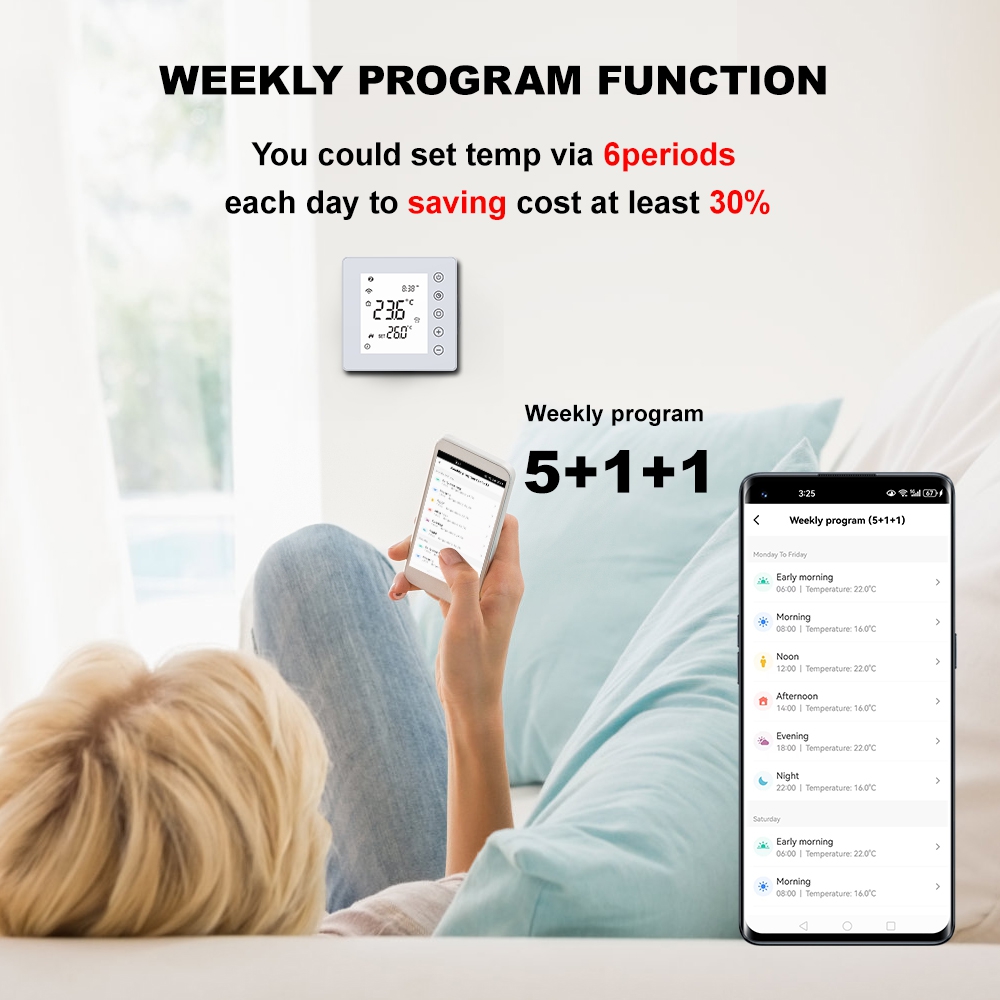
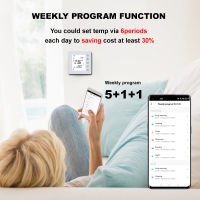
*Weekly program each day 6periods energy saving for you
*China TOP1 relay to make sure thermostat 100,000 lifetime
*Data memory even power off
*Control accurancy 0.5°C,Measure Temperature accurancy:0.1°C
*WIFI/ZIGBEE/MODBUS flexiable communication way for you select
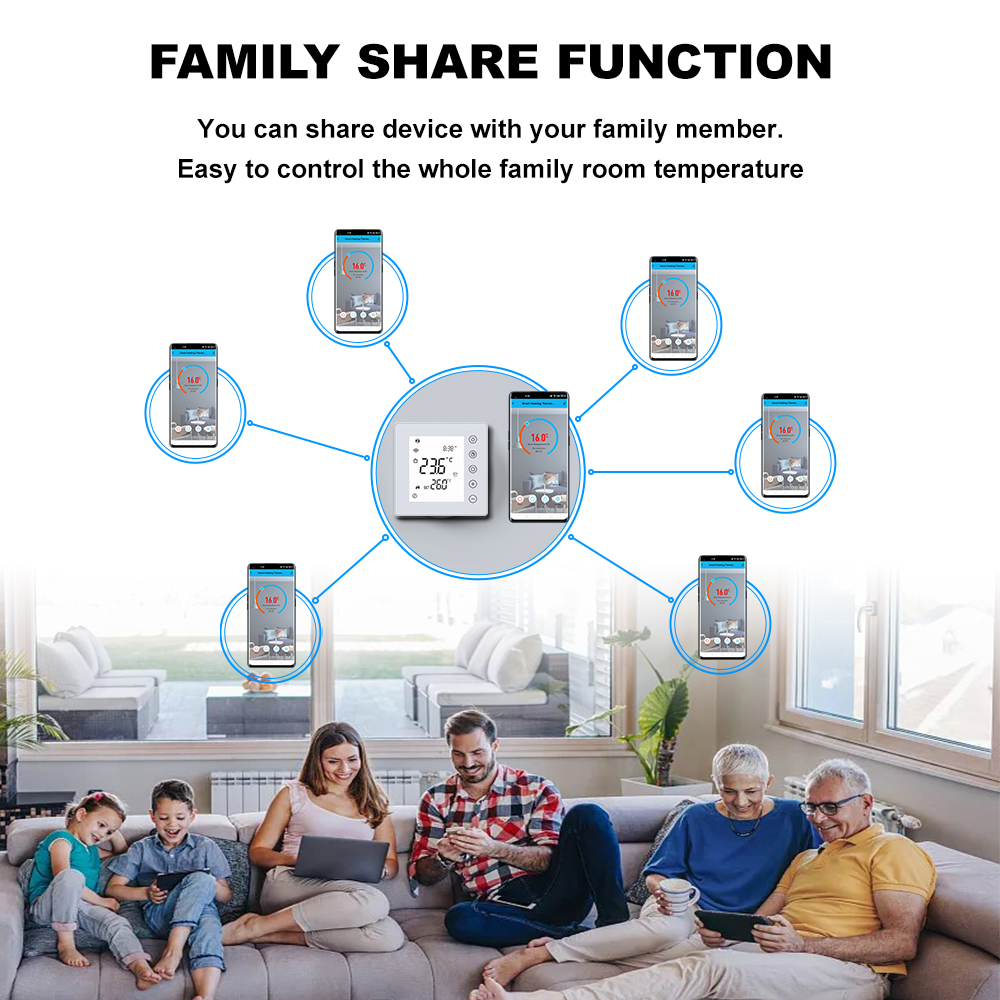
*Tuya/Smart life app to control your thermostat anywhere
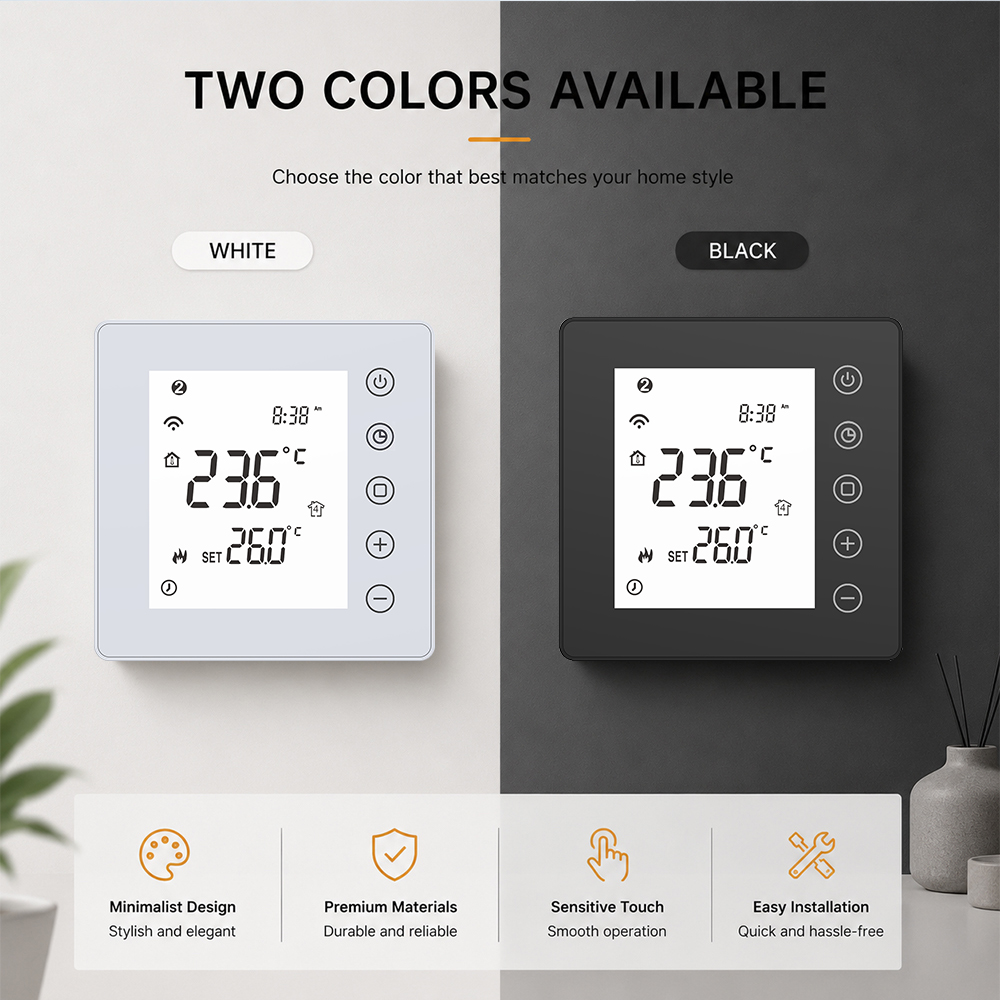
*White/Black/ODM color
*CE/ROHS/UKCA approved
TP201 is a Premium room thermostat with a modern touch screen, It design with 7days programmable timer, and smart WiFi connectivity.With white and black housing color option.It widely use in smart home,hotel,villa etc
Technical Data
| Features | Parameters |
| Application | Water Heating System |
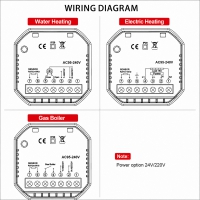
| Power | AC95- 240V/24V option, 50/ 60Hz |
| Controlled Load | 5A |
| Mode | Programmable/Manaul Mode optional |
| Temperature Accuracy | +/-0.5℃ |
| Temperature Range | 5~60℃ |
| Programmable function | 5+1+1 Weekly Program |
| Button Lock Function | YES |
| Antifreeze Function | YES |
| Memory Function | YES |
| Temperature Sensor | Two Sensors(UHP model)/One senor(WHP model,GCmodel) |
| External Floor Sensor Length | 2.5meters |
| Sensor | NTC 10k 3977 |
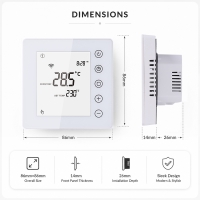
| Installation Hole distance | 86box/60mmEurope standard round box |
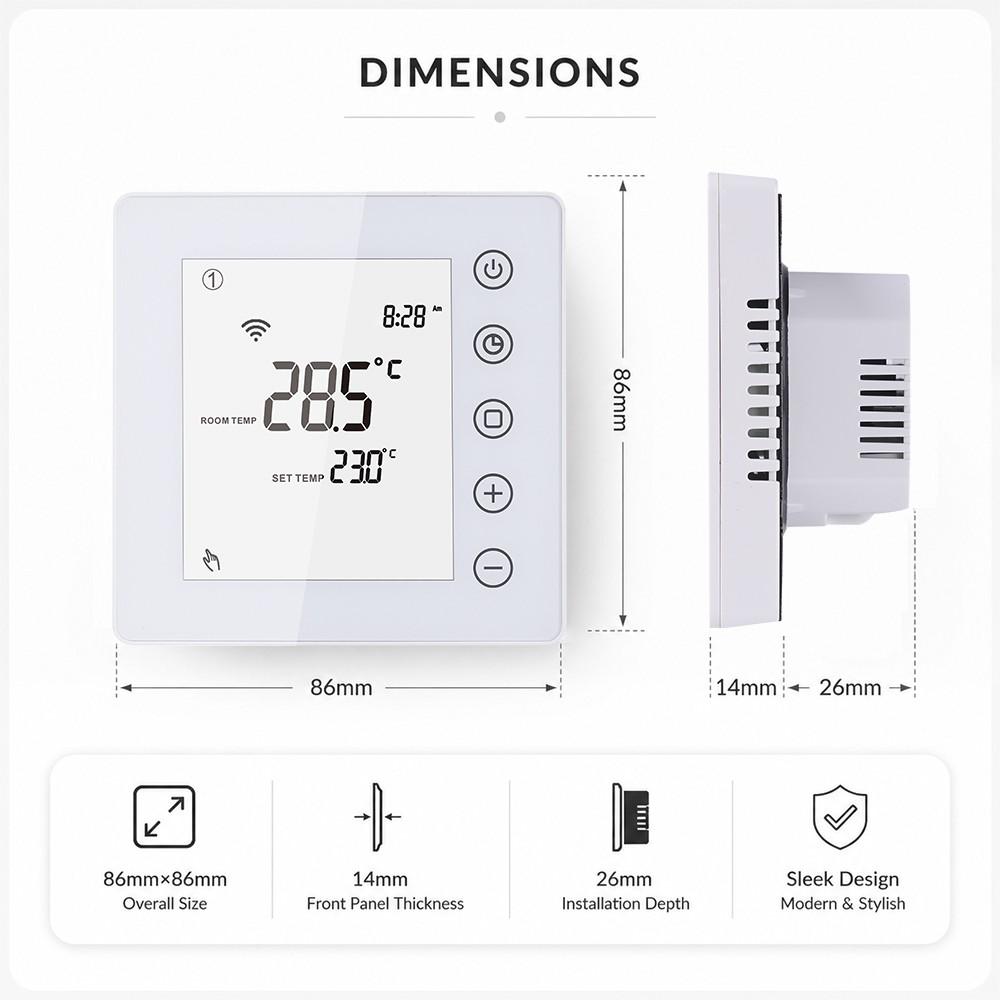
| Dimension | 86x86x40mm |
Features
◆Large LCD Display
It use TN LCD with backlight.Easily to see.
◆Display drarkness Change as you wish
It design easy to change the display and standby light range 0-100%
◆Child lock
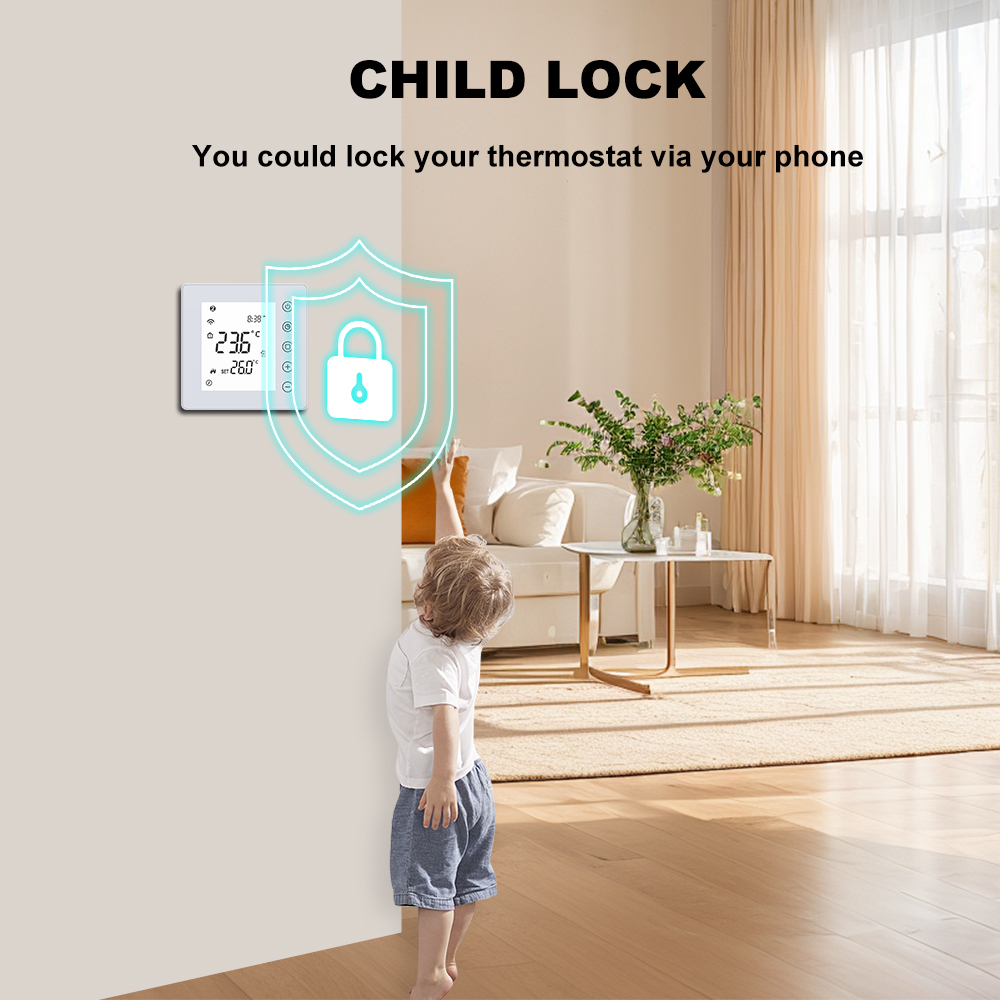
This thermostat provide child lock press up and down button to select.
◆Weekly Programmable Function
This thermostat provide 7days programmable funciton,You can set your target temperature and time as you need.
◆Data Memory
This thermostat provide data memory when power off.All of the parameters still remain the same before power off
◆Voice Control
This thermostat provide Voice Control with Google Assistant and Amazon Alexa
Application
◆Hotel underfloor heating system ◆Villa hydronic heating control ◆Building heating control system ◆Apartment heating control system ◆Smart home heating control
FAQ
1. What is a room thermostat and how does it work?
A room thermostat is a temperature-sensing device that controls your heating system by comparing the actual room temperature against your desired set temperature. When the room temperature drops below the set point, the thermostat sends a signal to turn the heating on; when the target is reached, it switches the heating off. This cycle maintains a consistent, comfortable indoor climate.
2. What types of heating systems can a room thermostat control?
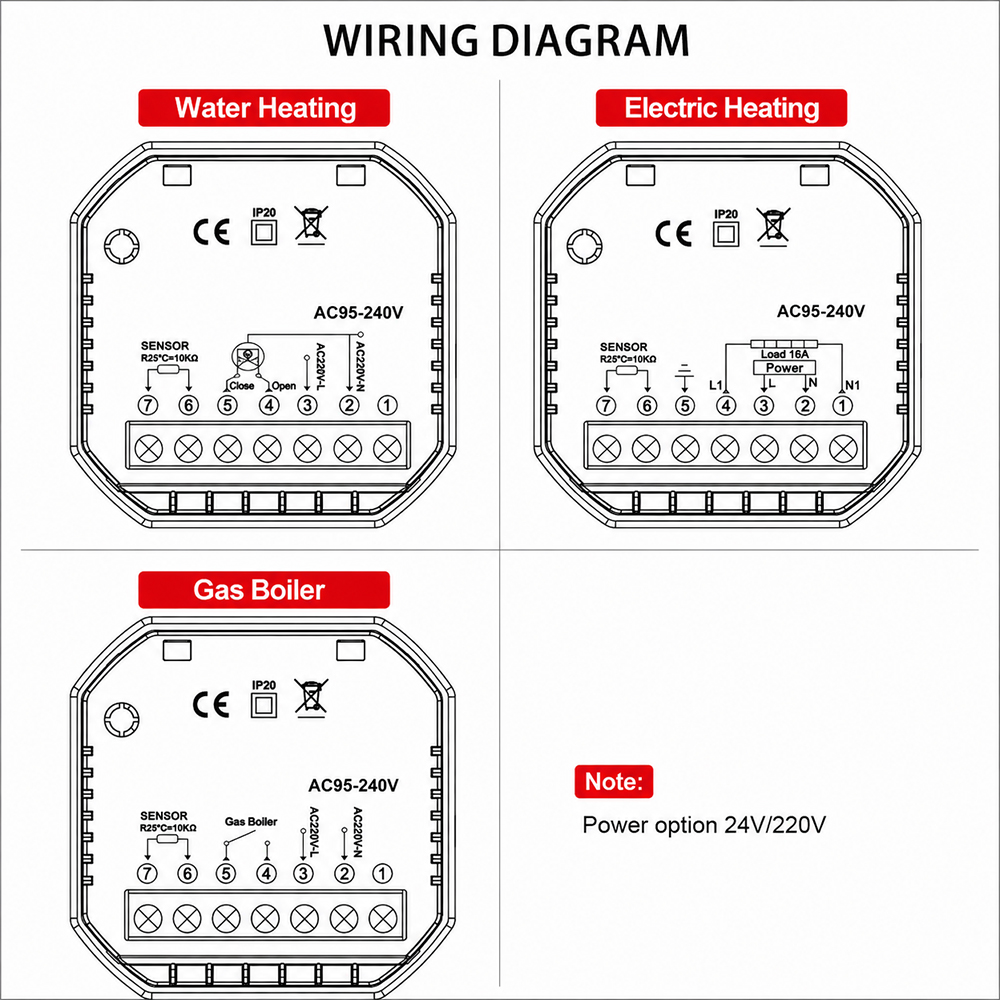
Modern room thermostats can control electric underfloor heating, water-based (hydronic) underfloor heating, water radiator systems, and gas boilers. Some models support all three types from a single unit, selected via wiring configuration.
3. What is the difference between a mechanical and a digital thermostat?
Mechanical thermostats use a bimetallic strip that physically bends with temperature change and typically have a temperature swing of 2–5°C. Digital thermostats use electronic sensors (NTC thermistors) with ±1°C accuracy, offer programmable schedules, backlit displays, and smart connectivity — providing far more precise and energy-efficient control.
4. Do I need a professional electrician to install a thermostat?
Yes, it is strongly recommended. Thermostats connect directly to mains voltage (95–240V AC) and heating loads. Incorrect wiring can cause electrical shock, fire, or equipment damage. Always disconnect/isolate the power supply before installation and have a qualified electrician perform the work.
5. Can I use both the internal and external sensor at the same time?
Yes — many thermostats offer a dual-sensor "ALL" mode where both the internal air sensor and external floor sensor work together. The thermostat reads the floor temperature for safety limits while using the air temperature for comfort control. This is the default recommended mode for electric heating.
6. How do I calibrate my thermostat if the displayed temperature is wrong?
Enter the configuration menu (usually by long-pressing a button for 7 seconds while powered off), locate the calibration setting (Function No. 1), and adjust from -9°C to +9°C. For example, if the thermostat displays 22°C but the actual room is 21°C, set calibration to -1°C.
7. What is "dead zone" or "switching differential"?
The dead zone (also called hysteresis or differential) is the temperature gap between when the heating turns off and when it turns back on. For example, with a set point of 22°C and a dead zone of 1°C: heating stops at 22°C and restarts at 21°C. A smaller dead zone gives tighter comfort but more frequent cycling; a larger value reduces cycling at the cost of slight temperature variation.
If you have any special requirements or questions that require prior consultation. Please fill out the following form and we will have the specialist contact you as soon as possible.
If you have questions or suggestions,please leave us a message,we will reply you as soon as we can!
0086-755-85218623
LisaKong
18925229935
www.toupwell.com
2/F.Building A.No.78 of AnLiang Road.YuanShan Street.LongGang District.ShenZhen.GuangDong.China
Please read on, stay posted, subscribe, and we welcome you to tell us what you think.


CopyRight © 2025 ShenZhen Toupwell Technology Co.,Ltd